
High-Quality Salt Lamp Cables Support Wholesale Lighting Supply
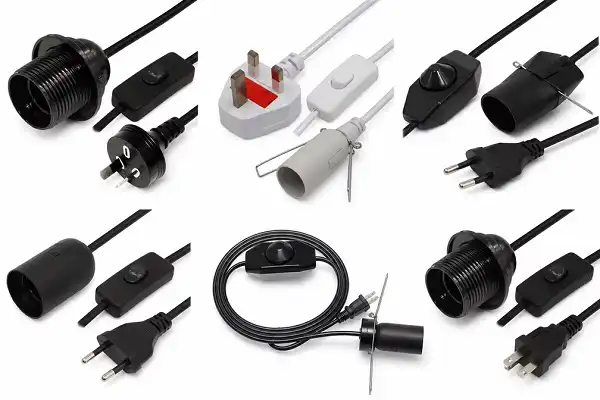
When sourcing wholesale lighting components, quality power assemblies directly impact product performance and customer satisfaction. Our UL-listed salt lamp cables combine robust construction with advanced safety features, addressing the specific needs of retailers and distributors serving the Himalayan salt lighting market. These professional-grade power cords feature heavy-duty butterfly spring clips for secure mounting, customizable switch options including stepless dimmers and 303 rocker switches, and compliance with international electrical standards. With 17 years of manufacturing expertise at Kuncan Electronics, we deliver reliable power solutions engineered for 24/7 operation, backed by comprehensive customization capabilities and fast production cycles that align with peak season demands.
Understanding Salt Lamp Cables — Materials, Types, and Safety
Why Material Selection Matters for Durability?
Power cord systems for Himalayan salt lamps have to deal with environmental problems that most salt lamp cables don't have to. Salt grains naturally pull water from the air around them, making microenvironments that are wet and speed up the breakdown of materials. Different types of insulation, like PVC, TPE, rubber, and LSZH compounds, are used in our wire systems. Each type was chosen for its specific performance qualities. When used in store settings, PVC insulation is very durable and cheap, while TPE insulation gives you more options when you're storing things cold or putting them on show. For higher wattage uses, rubber jacketing is better at getting rid of heat, and LSZH materials meet strict fire safety standards for commercial installations. These choices about materials have a direct effect on how long the wire lasts. When properly defined, assemblies can usually last longer than five years of steady use, while generic options may break after 12 to 18 months.
Switch and Dimmer Technologies Explained
Modern power assemblies for salt lamps have two main control systems that are designed to meet the needs of different market segments. The 303 rocker switch is ideal for value-conscious stores and simple product lines because it only has an on/off button. This type of switch has internal contacts that can handle 10A at 125V. This means that it will work reliably across the 75W to 100W load range that salt lamp lights usually use. Rotary dimmer switches have more features and let users change the level of lighting in a room without taking out the lamps. These stepless dimmers use variable resistance circuits to keep the light output stable across the whole range of adjustments. This stops flickering problems that are common with cheaper alternatives. Knowing what your target customers want helps you decide how to divide your inventory between these two configurations so that you get the best mix of simplicity and feature-richness when you're ordering in bulk.
Certification Requirements and Liability Protection
Electrical safety certificates are necessary for responsible wholesale sourcing and can't be skipped. Our UL and cUL listings show that cable systems have been through a lot of tests, such as dielectric withstand testing at 1250V–1500V, polarity proof, and pull force testing up to 35 lbs. These licenses show that the product meets the standards of the National Electrical Code and protect the company from responsibility if something goes wrong with the product. In addition to meeting North American standards, our salt lamp cables are also certified by CE, VDE, ETL, SAA, and BS/UKCA. This means they can be sold in any country without any problems with regulations. Instead of depending only on what the seller says, purchasing managers should check the authenticity of the certification directly against a database. This is because fake paperwork is still common in foreign sourcing channels. Having the right certification paperwork not only keeps you out of trouble with the law, but it also boosts your brand's image among quality-conscious customers and stores.
How to Replace and Fix Salt Lamp Cables — Step-by-Step Solutions
Common Failure Patterns and Root Causes
There are three main ways that cable assemblies in salt lamp applications usually break, and for salt lamp cables, wire insulation breaks down when the constant heat from the bulb joins with water absorption, making areas that are weak and easily break when handling, and connection problems at plug connections are caused by bad crimping or rust on non-plated contact surfaces, and this can show up as power going out intermittently or completely, and socket base failures happen when butterfly clip systems get weaker over time, and this lets bulbs move around and make hot spots on salt crystal surfaces. Wire insulation breaks down when the constant heat from the bulb joins with water absorption, making areas that are weak and easily break when handling. Connection problems at plug connections are caused by bad crimping or rust on non-plated contact surfaces. This can show up as power going out intermittently or completely. Socket base failures happen when butterfly clip systems get weaker over time. This lets bulbs move around and make hot spots on salt crystal surfaces. People who buy in bulk and keep a lot of inventory should keep an eye on failure patterns across different batches of products, since problems that keep happening often mean that manufacturing facilities aren't doing a good job of quality control. Knowing these failure modes lets you make changes to specifications and have conversations with suppliers about performance that stop problems from happening again.
Safe Replacement Procedures for Bulk Operations
To keep workers safe and the product's integrity, replacing power cord assemblies needs to be done in a structured way. The first thing that must be done is to disconnect all power sources. Next, the bulb must be completely removed to avoid breaking when the plug is released. By gently pressing on the wing tabs, the butterfly clip mechanism comes apart, letting the socket base come out of the salt crystal hole without any tools. A visual check of the lamp cavity should confirm that there are no buildups of dirt or moisture that could affect how well the new salt lamp cables work. To put in replacement assemblies, you have to insert the socket base while the butterfly clips are fully compressed and then let go to make sure they are firmly engaged with the interior walls. A light pull test makes sure the mounting is secure before the bulb is put back in and the power is turned back on. Maintenance teams that have to do a lot of replacements should set up specialized desks with good lighting and surfaces that don't conduct static electricity. This will speed up the process and reduce damage from handling.
When Professional Intervention Becomes Necessary
Minor cable fixes can still be done for simple problems like replacing plugs or cleaning the switch mechanism, but some failure conditions need to be looked at by an expert. To find internal conductor breaks in cable jacketing, you need special test tools, and they can't be fixed consistently in the field without lowering safety margins. When internal electrical parts of a dimmer mechanism fail, the whole assembly has to be replaced because changes that only fix a few parts could cause a fire because they don't have enough current rating. Socket base damage, like cracked ceramic or twisted screw threads, makes the electrical contact less reliable, so it should be replaced right away instead of being tried to be fixed. When handling a lot of returns, wholesale operations should make it clear what problems can be fixed in the field and what problems need to be replaced completely. This will help them make the best use of their workers while still meeting safety standards.
Choosing the Best Salt Lamp Cables for Your Business Needs
Specialized Features Versus Standard Lamp Cords
Because of the special needs of hygroscopic lighting uses, salt lamp cables are made with design features that aren't usually found in lamp cords. Standard lamp wires usually have simple crimp terminals and light socket bases that work fine in dry indoor settings. However, some combinations have better terminal plating and stronger socket construction that doesn't rust when exposed to moisture. Standard threaded socket designs don't have the butterfly clip mounting system, which lets the device be securely installed in salt crystal cavities that aren't perfectly round without the need for precise hole geometries. There are also different choices for wire gauge. For salt lamp uses, heavier 18AWG or 16AWG cables work best because they reduce voltage drop and heat buildup over the usual 6-foot length. These unique features make the assemblies last longer in real life, with quality assemblies lowering warranty claims by 40 to 60% compared to standard lamp cords that have been used for other things.
Evaluating Customization Capabilities for Market Differentiation
Our factory offers a wide range of customization options that help brands stand out in retail markets that are very competitive, and for salt lamp cables, wire lengths can be changed beyond the normal 6-foot limit to meet the needs of specific displays or installations, and custom lengths from 3 feet to 12 feet are available without tooling fees for orders over 500 units, and you can change the color of the jacket to match your brand's colors, and you can choose from standard black and white or custom Pantone colors for orders over 1000 units. Wire lengths can be changed beyond the normal 6-foot limit to meet the needs of specific displays or installations. Custom lengths from 3 feet to 12 feet are available without tooling fees for orders over 500 units. You can change the color of the jacket to match your brand's colors. You can choose from standard black and white or custom Pantone colors for orders over 1000 units. Private label packaging includes custom branding elements like placing logos, photos of the products, and writing instructions in multiple languages, which makes the packaging stand out more on store shelves. Different socket base configurations are used for different markets. For example, E12 and E26 bases are used in North America, while E14 and E27 bases are used in Europe and Asia. With these customization choices, common parts can be turned into brand-building assets that command higher prices.
Warranty Terms and Quality Assurance Commitments
Manufacturing guarantees show that the seller is sure that the product will last, and they also help bulk buyers lower their risk. Our standard one-year warranty covers manufacturing flaws like wire insulation failures, switch mechanism malfunctions, and socket base defects. Once a claim is verified, a replacement unit is sent out within 72 hours. Quality assurance goes beyond guarantee coverage by using batch testing methods to check all production runs for important safety factors. High-pot dielectric testing makes sure that the insulation stays strong under high voltage, continuity testing makes sure that the conductors are properly terminated, and mechanical pull testing makes sure that the butterfly clip stays in place at the required level. Salt spray rust testing mimics long-term contact to humid settings, which makes sure that plated parts keep working electrically for many years. Procurement teams should ask for detailed quality documentation, such as test reports and copies of certifications, because openness about quality processes is strongly linked to performance in the field.
Procurement Strategies for Bulk Salt Lamp Cable Buyers
Balancing Local Versus International Sourcing
When choosing a supply route for power cord assemblies, wholesale buyers have to make strategic choices. They have to weigh the benefits of lower costs against the benefits of better service. When compared to North American distribution, international sourcing from production hubs like Dongguan and Shenzhen usually saves 30–45% on costs. This makes this method appealing for high-volume projects where transportation lead times match inventory planning cycles. Our Dongguan factory has production times of 15 to 25 days for large orders, and samples are ready in 3 to 7 business days so that you can check the design before committing fully. Local wholesalers offer faster emergency restocking and easier contact, but their prices are higher, which affects how margins are set. The best way to source goods is usually a mix of these methods, with planned inventory builds done by foreign manufacturers and close relationships with local distributors so that quick responses can be made to sudden increases in demand or quality problems that need to be fixed right away.
Optimizing Minimum Order Quantities and Pricing Tiers
Volume-based price systems take into account the fact that longer production runs and less frequent setups make factories more efficient. There are different levels of pricing at our site. The first level is for 500 units, and savings get bigger at 1000, 2500, and 5000 units to take advantage of economies of scale. Smart buyers don't see minimum order quantities as barriers; instead, they structure their orders to get the best prices while keeping inventory costs low through warehouse partnerships or consignment agreements. Mixed-configuration orders that include a variety of switch types or socket bases can add up to a certain volume, giving you options without giving up price advantages. Blanket purchase orders with scheduled releases let buyers commit to yearly amounts that qualify for the best prices. They also keep just-in-time delivery in line with real consumption patterns, which lowers the need for working capital and the risk of running out of products.
Supplier Evaluation Criteria Beyond Price
Before choosing a factory partner, you need to look at their full range of skills, not just the cost per unit, and for salt lamp cables, verifying production capacity makes sure that suppliers can increase output to meet the needs of a growing business without lowering quality, and facility audits make sure that there is enough equipment redundancy and staff depth, and how quickly product changes or problems are fixed depends on how well technical help is available, and responsive engineering teams add a lot of value by optimizing designs and giving advice on how to use them. Verifying production capacity makes sure that suppliers can increase output to meet the needs of a growing business without lowering quality. Facility audits make sure that there is enough equipment redundancy and staff depth. How quickly product changes or problems are fixed depends on how well technical help is available. Responsive engineering teams add a lot of value by optimizing designs and giving advice on how to use them. After recent global problems, supply chain resilience became very important. To evaluate a supplier, it is important to know where the raw materials come from and how they plan to keep extra stock on hand. Responding quickly to after-sales support requests has a direct effect on a brand's reputation when problems happen in the field. This is why processing warranty claims quickly and having replacement parts available are key performance indicators. At Kuncan Electronics, we offer a 24-hour response guarantee and fast order processing during busy times. This is an example of the operational excellence that sets trustworthy manufacturing partners apart from transactional vendors.
Enhancing Product Value with Salt Lamp Cable Innovations and Future Trends
Smart Cable Technology and IoT Integration
New cable technologies include ways to join that turn passive power supply into engaging experiences for users. Smart cable assemblies have wireless communication units that let tech-savvy customers who are used to connected home ecosystems handle the on/off switch from their smartphones. Ambient light sensors change the lower settings automatically based on the amount of light in the area. This makes the salt lamp easier to see throughout the day without any extra work from the user. Energy tracking circuits keep track of how much power is used over time. This information helps with planning repairs and figuring out how much it costs to run the business. These features raise the prices of parts by 15 to 25 percent, but they allow high-end products to stand out in markets that are already full. Wholesalers who sell gifts and home decor should keep an eye on how quickly smart home devices are being adopted so they can time the release of connected salt lamp cables to capture early adopter markets before the products become more common and margins get squeezed.
Energy Efficiency and Sustainability Considerations
More and more, regulations and customer tastes are pushing lighting solutions that use less energy, which is pushing cable assembly specs toward better designs. Transmission losses are kept to a minimum by using lower-resistance circuit materials and wire lengths that are just right. This means that more of the power that is input is turned into useful light instead of waste heat. When compared to regular incandescent bulbs, LED salt lamp bulbs use a lot less energy. For example, an LED assembly only needs 6 to 8 watts of power to produce the same amount of light as an incandescent bulb. More and more jacket materials are made with recycled materials that don't affect their electrical performance. This helps retailers meet their sustainability goals and addresses customer worries about the environment. End-of-life issues affect the choice of material. Designs made of a single material make recycling easier than designs made of multiple materials that need to be separated before they can be processed. Progressive wholesalers should create product lines with different levels of efficiency, keeping the cheaper options and adding more expensive, environmentally-friendly options that can bring in more customers who care about the environment.
Regulatory Evolution and Compliance Planning
Electrical safety standards are always being improved as a result of new studies and responses to trends of accidents in the field. Recent changes to the UL standard have made it stricter about strain relief specs and checking the durability of switch mechanisms. This is because of failure modes seen in different types of lamps. Energy efficiency rules like Title 20 in California and standards set by the federal Department of Energy may include types of decorative lighting that aren't covered by them yet. This could mean that designs need to be changed to keep getting into the market. International attempts to harmonize through IEC standards aim to make certification easier, but they are happening slowly, so during transition times, producers will have to keep up with multiple approvals at the same time. Wholesale buyers should work with suppliers that show they can actively monitor compliance and have the engineering skills to adapt products as rules change. This way, buyers can avoid costly inventory going out of date or market access problems.
Conclusion
To find the best power assemblies for Himalayan salt lighting, you have to find a balance between technical requirements, certification needs, and the supplier's ability to deliver products that meet customer expectations and protect the brand's reputation, and for salt lamp cables, quality cable assemblies made with the right materials, strong construction, and safety standards that have been checked out lower guarantee claims, make end users happier, and help the company place itself as a top brand, and when you combine volume efficiency with supply chain resilience in a strategic way, you can get competitive prices without sacrificing reliability. Quality cable assemblies made with the right materials, strong construction, and safety standards that have been checked out lower guarantee claims, make end users happier, and help the company place itself as a top brand. When you combine volume efficiency with supply chain resilience in a strategic way, you can get competitive prices without sacrificing reliability. As smart technology and environmental rules change the lighting markets, working with manufacturing experts who can predict trends and make sure businesses follow the rules will help them stay successful in stores that are always changing.
FAQ
Can LED Bulbs Work with Standard Salt Lamp Power Cords?
Quality salt lamp power kits qualified for the right wattage levels, usually 75W to 100W maximum capacity, work with LED bulbs. The most important thing for connectivity is the type of dimmer, not the general specs of the cord. Rotary dimmer switches made for incandescent bulbs may cause LEDs to flicker or fail early because their electrical properties are not compatible. Buying dimmer kits or on-off switch configurations that work with LEDs gets rid of these problems for good, making sure that all bulb technologies work well together.
What Voltage Ratings Should International Buyers Specify?
North American markets need 110V–120V kits with NEMA 1-15P plugs and E12 or E26 socket bases. European and Asian markets, on the other hand, need 220V–240V standards with plugs that work with their voltage and socket bases that are E14 or E27. When you order the wrong voltage levels, you put safety at risk and don't follow the rules. Giving information about the target market when asking for quotes makes sure that the specifications are matched correctly.
Are Custom Cable Lengths Available for Special Applications?
You can get custom lengths from 3 feet to 12 feet, and if you buy more than 500 units, you don't have to pay for tooling. Shorter wires are better for small store displays or placing on a table, while longer sections are better for placing on the floor or installing on shelves that are higher off the ground. When you place an order, you can specify the lengths you want. This lets the production schedule be optimized, and it doesn't change the normal 15–25 day lead times for big orders.
Partner with Kuncan Electronics for Premium Salt Lamp Cable Solutions
Kuncan Electronics has been making electronics for 17 years and can help bulk buyers who need reliable power assemblies to protect brand names and make product lines stronger. For options that are perfect for the needs of each market, our UL-certified salt lamp cables are built to last and can be changed in a lot of ways. We help retail companies by offering unique branding options, quick production cycles that are perfect for busy times, and stable supply chain operations backed by ETL, CE, VDE, and SAA certifications that are recognized around the world. As a seller of salt lamp cables with a lot of experience, we offer quick technical support and reasonable prices that help our clients stay competitive in the market while also making sure the safety and performance of their products. You can email us at rhea@szkuncan.net or visit nema5-15.com to get samples, talk about special orders, and find out how our production skills can help you with your wholesale lighting supply needs.
References
1. National Electrical Manufacturers Association (2023). "NEMA Standards Publication for Lamp Cord Assemblies and Accessories," NEMA Document LC-1, Washington, DC.
2. Underwriters Laboratories (2022). "Standard for Portable Lamp Cords," UL 817 Eighth Edition, Northbrook, Illinois.
3. Institute of Electrical and Electronics Engineers (2021). "Recommended Practice for Electrical Installations in Residential and Light Commercial Environments," IEEE Standard 141-2021.
4. International Electrotechnical Commission (2023). "Insulated Cables and Flexible Cords for Household and Similar Applications," IEC 60227 Series, Geneva, Switzerland.
5. American National Standards Institute (2022). "Safety Requirements for Decorative Lighting Products," ANSI/UL 588 Standard, New York.
6. Canadian Standards Association (2023). "Cord Sets and Power Supply Cords," CSA C22.2 No. 49-23, Toronto, Ontario.

USER EVALUATE
Here is the customer's evaluation of us