
Sourcing VDE Certified C15 Power Cables: What You Need to Know
If you want to find solid power options for places with high temperatures, you need to know the specs and certifications of your cables. The C15 power cable is unique because it has a special connection made for equipment that works in harsh thermal conditions, where regular cords just can't keep up with the demands. The VDE certification gives you even more peace of mind because it shows that these wires meet the strict European safety standards for electrical equipment. Choosing the right VDE certified C15 power cable has a direct effect on working uptime, safety compliance, and the long-term dependability of equipment, whether you're in charge of server rooms, industrial control systems, or data center infrastructure.
Understanding VDE Certified C15 Power Cables
What Makes C15 Connectors Different
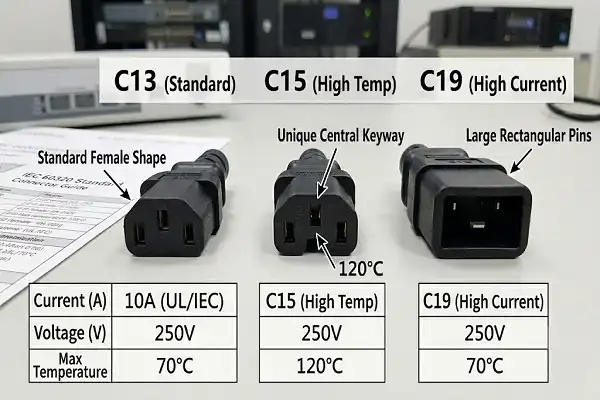
The IEC 60320 C15 connector is different from the more common C13 connector because it has a unique pointed shape. This notch isn't just for looks; it's also a real key that keeps lower-rated wires from going into high-temperature C16 inlets. The C15 connector can handle temperatures up to 120°C, which is much higher than the normal C13 connector's rate of 70°C. Because it can hold so much heat, it is essential for equipment that makes a lot of heat while it works.
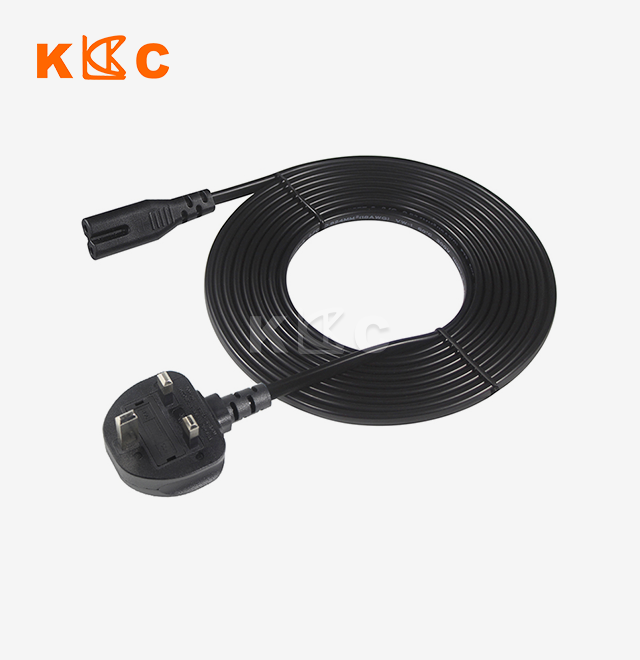
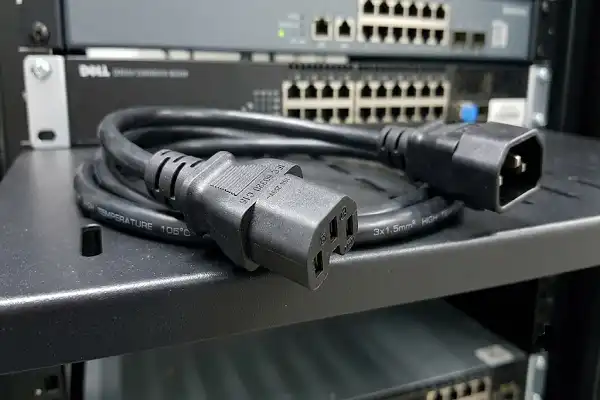
Our VDE/BS certified UK to IEC C15 power cable is made of high-quality, heat-resistant materials and H05RR-F rubber, which keeps the temperature stable even when the temperature outside rises. This higher temperature tolerance is good for server rooms, UPS systems, and industrial control equipment because it lowers the chance that connectors will break, which could cause power outages or safety issues.
The Importance of VDE Certification
The VDE (Verband der Elektrotechnik) is one of the most reputable private electrical safety testing groups in Europe. When a power cord has the VDE label on it, it means that it has been thoroughly tested for electrical safety, mechanical sturdiness, and the quality of the materials used. This approval proves that the product meets European standards and gives purchasing teams around the world faith in its quality.
In addition to VDE certification, our wires are also certified by BS (British Standards), CE, and ETL. This makes sure that they can be used in all foreign markets. This multi-certification method makes it easier to keep track of compliance when installing tools in different regions, so you don't have to worry about differences in regulations between regions.
Technical Distinctions: C15 vs. C13 vs. C19
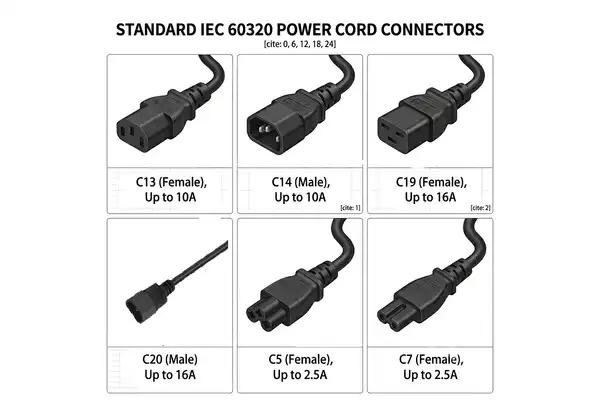
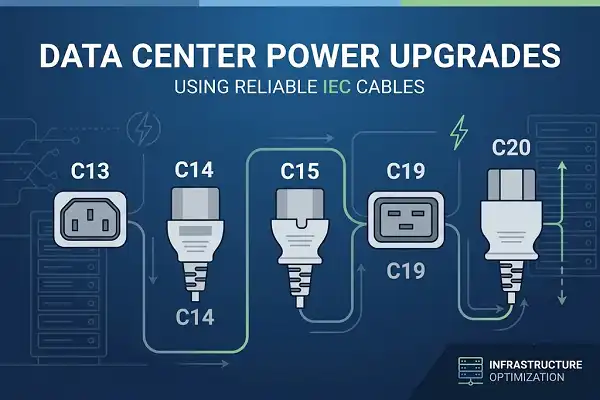
In buying, knowing the differences between connectors helps keep mistakes from costing a lot of money. The C13 connector can handle up to 10A and 70°C, so it can be used with most types of computers. The C15 connector can handle the same amount of electricity, but because it has notches, it can handle temperatures up to 120°C. The bigger C19 connector can handle up to 16A for power-hungry devices, but it can only handle temperatures up to 70°C, the same as the C13 connector.
One-way compatibility is created by the angled C15 design. C15 cables can connect to standard C14 inlets, but C13 cables can't connect to C16 inlets made for high-temperature use. This safety feature keeps people and equipment safe by preventing the accidental use of wires that aren't right for the job in heat-sensitive situations.
Key Criteria for Selecting VDE Certified C15 Power Cables
Temperature and Voltage Specifications
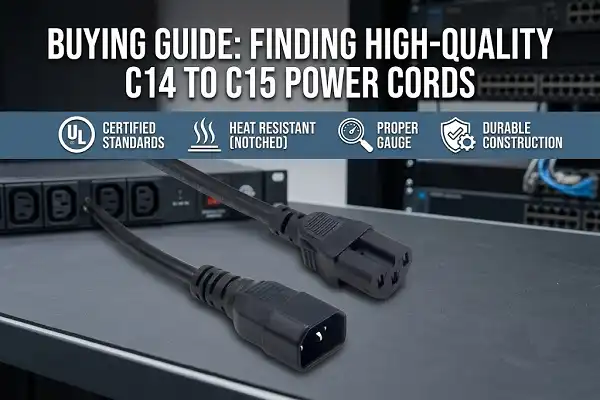
The first step in making the right choice is to make sure that the cable's specs match the needs of your tools. The 120°C temperature limit of C15 power cables covers places where heat naturally builds up, like rack-mounted poe switches that power many devices or server power sources that are constantly being used. Our wires can handle 250V AC at 10A, which means they can work with both 120V and 240V power systems that are popular in North America and Europe.
The voltage drop and heat production during operation are affected by the wire diameter choice. We have 1.0mm² and 1.5mm² choices. For longer cable runs or tools getting close to the maximum capacity, the thicker gauge is best. Choosing the right size keeps the power quality high and keeps the wire from getting too hot, which could damage the insulation over time.
Cable Construction and Durability
How well wires can handle mechanical stress and external factors depends on the material they are made of. When it comes to flexibility, H05RR-F rubber cable design is better than PVC options. It stays flexible even in cold places and doesn't react with oil or chemicals. This adaptability is useful in crowded rack spaces where wires have to go around tight turns without hurting the internal conductors.
The strain release design on both ends keeps the wire from wearing out over time from being handled or vibrated over and over again. Before they leave our plant, all of our wires go through 100% Hi-Pot testing, which uses high voltage to check the integrity of the insulation and find any production flaws. This testing finds possible weak spots that might not show up until the wires are used in important situations.
Safety Rules and EMI Shielding
Electromagnetic interference can mess up sensitive equipment, especially in places where there are changing frequency drives or a lot of servers. Most normal C15 power cables don't have shielding, but we can make custom cables with braided EMI shields for sites where noise from electricity is a problem. This protection keeps signals safe in equipment that is sensitive to problems with power quality.
Our agreement with RoHS and REACH protects the earth at every stage of a product's life, from making it to throwing it away. These approvals deal with limits on dangerous chemicals, which is in line with companies' goals for sustainability and meets the needs of markets that care about the environment.
Comparing Market Options for VDE Certified C15 Power Cables
Evaluating Product Variations
The length of a cable has a big effect on both how it works and how it is managed. Standard lengths range from 0.5 meters for equipment that needs to be close to power distribution units to 3 meters for equipment that needs to be placed in a more open way. Custom lengths get rid of the extra wire that makes managing airflow in computer racks harder, and they also avoid the voltage drop that comes with runs that are too long. We offer length choices that can be changed to fit your exact needs, so you're not limited to standard setups that might not work for your installation.
Standard builds are different from heavy-duty builds because standard builds don't have stronger strain relief, thicker insulation layers, or better connecting housings. Because of these qualities, they are suitable for use in industrial settings where C15 power cables may be connected and disconnected many times, be exposed to vibrations from nearby machines, or become dirty. Standard design is good for setups that stay put in controlled settings like data centers and don't need much cable handling after the initial installation.
Brand Comparison Considerations
Global names like APC, Tripp Lite, and Belkin control the retail market with standard goods that come with well-known guarantee plans. These companies are great at making sure they have stock that can be bought in small amounts and with clear wait times. Their goods are useful for replacing things right away or for small-scale operations where customization isn't needed.
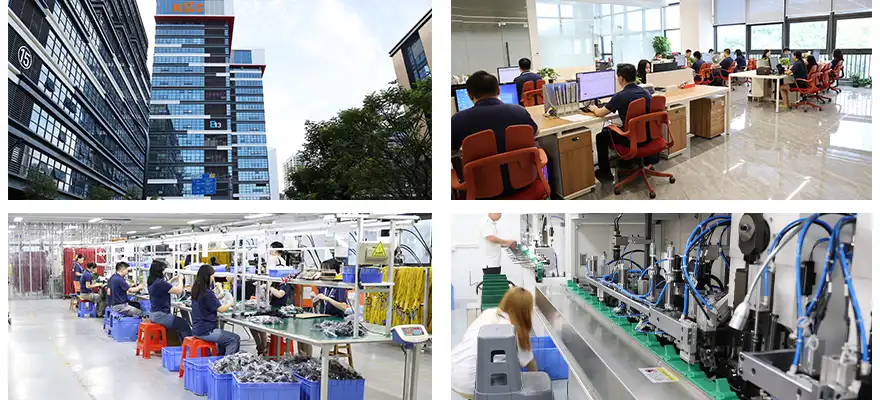
When buying in bulk or for specific needs, B2B buyers can benefit from working with manufacturing partners like Kuncan Electronics. Because we've been making products for 17 years, we can customize them in a number of ways, such as by making them in different lengths or colors to make them easier to find in a circuit, giving them their own label for OEM uses, and providing technical help throughout the design process. With more than 300 trained workers and streamlined production processes, we can give samples in 3–7 days and finish large orders in 15–25 days, which works for both project deployment and review timescales.
Balancing Cost and Certification Integrity
When making purchasing choices, people often have to balance quality needs with limited budgets. For real VDE certification, the plant has to be inspected and tested on a regular basis, and the costs of these are built into the prices of real makers. If the prices are very low, it could mean that the products don't have the right approvals or are made with low-quality materials that aren't safe or durable.
It is possible to save money without losing quality when you buy in bulk. Our flexible method lets you get savings for large orders while still not imposing minimum order quantities on smaller restocking needs. This gives you the freedom to choose the right amount of goods, so you don't waste money on unnecessary items and can make sure you have what you need when you need it when you need to add or repair equipment.
Best Practices for Procuring VDE Certified C15 Power Cables
Identifying Your Technical Requirements
A thorough needs survey is the first step to successful buying. Write down the details of your equipment, such as the types of inputs, the amount of power it needs, and the temperature at which it will be used. Think about how you can expand in the future. If you buy C15 power cables with the right temperature ratings now, you won't have to pay as much to replace them later if the number of pieces you need to cool grows or the cooling capacity decreases.
There is more to equipment connectivity than just a physical link. Check that the fuse values in UK plugs (if they apply) match the needs for circuit safety and the power that the equipment uses. Our UK BS 1363/A plugs have the right kind of fuses, which protect wires and devices that are attached to them from overcurrent situations that could happen when equipment breaks down.
Sourcing from Certified Suppliers
Checking the accuracy of a certification keeps you safe from fake goods that could be dangerous. Ask for copies of real VDE test records that show the results of batch testing and the scope of the certification. Genuine makers are happy to give you this paperwork because it shows that they care about quality control.
Every output batch at our Dongguan plant is put through strict testing procedures that are in line with ISO standards. We only use products that are in line with RoHS and REACH, and we provide paperwork that meets both safety and environmental rules. This makes it easier to trust that the goods that come to your building will meet the requirements that were agreed upon during procurement.
Using options for customization
Standard goods work well for most people, but customizing them can meet specific operating needs and make things run more smoothly. Custom wire lengths get rid of extra slack that gets in the way of airflow in computer racks and makes it safer for people to walk on in industrial settings. Color-coded choices make it easier to find the right circuit, which cuts down on the time needed to fix problems.
OEM makers use private labels to put wires into whole system packages. Our engineering team offers free design review and technical help to make sure that custom standards achieve the desired performance characteristics without causing compatibility problems that were not expected. We go from being a simple provider to a strategic partner helping you build your product because we work together.
Testing and Verification of Compliance
Both visible and functional testing should be part of the receiving check. Check for harm from shipping, make sure the plug fits your equipment, and make sure the paperwork matches what you bought. Sample testing from each batch gives you more confidence, especially for big deployments where a bug that spreads could affect many setups.
We guarantee that our goods will be free of manufacturing flaws for a year, and if there are any problems, we will replace or fix them right away. This guarantee shows that we trust the quality of our products and protects your investment. As part of the warranty support, you can get expert help to figure out if the problems are caused by faulty cables or something else in the system. This will help you fix the problems quickly.
Case Studies and Application Scenarios
Data Center Temperature Management
A regional colocation provider had power outages in high-density server racks, even though the lines were the right size and there was enough cooling. An investigation showed that standard C13 wires that connect rack-mounted power strips to overhead power distribution units became less reliable after being used for a long time in hot aisles where temperatures regularly topped 80°C. When these were replaced with VDE certified C15 power cables, the problems stopped because the 120°C-rated connectors stayed solid even when the temperature outside changed. The rollout included 240 racks spread across three buildings, so the wire lengths had to be carefully coordinated to fit the different distances between equipment and PDUs. The better thermal stability increased total downtime and decreased the number of repair calls for problems with power.
Industrial Control System Reliability
A company that makes car parts had problems with control system restarts that stopped the automation of their production line. These restarts didn't happen at the same time every time, which made debugging harder. It was found that programmable logic controllers that were close to heat-treating equipment had power connection degradation because regular wires couldn't handle the high temperatures for a long time. The instability was fixed by using high-temperature power lines with C15 connectors. The cables kept their electrical integrity even when they were close to 115°C working conditions. This application shows how choosing the right cables has a direct effect on production uptime. Buying the right cables pays for itself by cutting down on the costs of downtime.
Custom OEM Integration
A company that makes medical tools needed power cables for diagnostic gadgets that were used all over the world. They needed different plug types for different areas, custom lengths to get rid of extra cable in hospital settings, and private labels that fit with their brand. To deal with the heat that high-intensity imaging parts produce, we came up with a complete answer that includes plugs in the UK, EU, and North America, all of which end in C15 connectors. Part of the tailoring process was making prototypes and trying them to make sure they would work with their equipment's electrical and thermal properties. By working together, they were able to get all the power cables they needed from a single source. This made their supply chain easier and made sure that the quality was the same in all regions.
Conclusion
To find VDE certified C15 power cables, you need to pay attention to the technical details, the reliability of the certification, and the supplier's skills that go beyond just having the product available. Standard wires don't work in high-temperature situations, but the notched C15 connector design does. VDE certification makes sure that safety and quality standards are met. A good buying process combines cost with long-term dependability, knowing that cable failures in important infrastructure cause costs that are much higher than the initial product savings. Working with manufacturing partners who have a lot of experience lets you customize cables to meet specific operational needs. This turns cables from common purchases into strategic parts that help tools work well and keep operations running.
FAQ
How Can I Verify VDE Certification Authenticity?
Real VDE certification comes with a test record that has a unique registration number that can be tracked in VDE's database. Ask suppliers for this paperwork before you buy, and use VDE's formal methods for verification to make sure the registration number is correct. Legitimate makers are happy to give you this information because it shows that they put money into getting the right approval. Be wary of sellers who only offer certification logos without any supporting documents. Fake certificates can put your safety and your liability at risk.
What Are the Key Differences Between C15, C13, and C19 Cables?
The main differences are the temperature levels and the amount of electricity they can carry. C13 connectors can handle 10A and temperatures up to 70°C, making them good for most computers. The 10A rating stays the same on C15 power cables, but they can handle temperatures up to 120°C thanks to a notched design that stops lower-rated options from being used in high-temperature situations. The actual size of C19 connectors is bigger, so they can handle 16A for power-hungry devices while still being rated for 70°C. The right type of connection for your application will rely on both the current needs and the temperature conditions.
What Lifespan Should I Expect from C15 Cables in Industrial Settings?
When used in the right conditions and with the right specifications, wires usually last between 5 and 10 years. Lifespan is affected by things like how often it is connected and disconnected, the temperature of the environment, the current load compared to the grade, and the presence of contaminants in the environment. When cables are constantly used in temperatures close to their maximum, they last less long than when they are used in mild temperatures. Visual checks done on a regular basis to look for discoloration, brittleness, or damaged connectors help find problems before they happen. Our rubber-jacketed design is more durable than PVC options, especially in places where the temperature changes or where chemicals are present.
Partner with Kuncan Electronics for Your C15 Power Cable Needs
Kuncan Electronics can help you with your high-temperature power connection problems because they have been making things for 17 years. We are a known C15 power cable maker and an Alibaba Verified Supplier. Our VDE/BS certified solutions come with full testing and world compliance. We can make samples for fast prototyping in 3–7 days and efficient mass production in 15–25 days at our Dongguan plant. This will make sure that your project stays on schedule. Our engineering team is here to help you with the design process, whether you need standard configurations or custom solutions with certain lengths, colors, or private labeling. We offer flexible ordering with no minimum order quantity limits for restocking needs, as well as bulk savings that make the most of your budget for buying things. Every cable comes with a one-year guarantee against problems caused by poor production. This shows how committed we are to quality and your peace of mind. Get in touch with our team at rhea@szkuncan.net to talk about your needs and get a custom price that takes into account your exact requirements, delivery plan, and support needs.
References
International Electrotechnical Commission. (2018). IEC 60320-1: Appliance Couplers for Household and Similar General Purposes - Part 1: General Requirements. Geneva: IEC Publications.
VDE Testing and Certification Institute. (2020). VDE Certification Guidelines for Power Cables and Connectors. Offenbach: VDE Verlag.
Johnson, R. M., & Peterson, K. L. (2019). Thermal Management in High-Density Computing Environments. IEEE Transactions on Components, Packaging and Manufacturing Technology, 9(4), 687-695.
European Committee for Electrotechnical Standardization. (2021). EN 50525-2-21: Electric Cables - Low Voltage Energy Cables of Rated Voltages up to and including 450/750 V. Brussels: CENELEC.
Martinez, D. A. (2022). Power Distribution Infrastructure for Modern Data Centers: Design Considerations and Best Practices. Journal of Data Center Engineering and Operations, 15(2), 112-128.
British Standards Institution. (2019). BS 1363-1:2016+A1:2018 - 13 A Plugs, Socket-Outlets, Adaptors and Connection Units - Specification for Rewirable and Non-Rewirable 13 A Fused Plugs. London: BSI Standards.

USER EVALUATE
Here is the customer's evaluation of us
_1781502912074.webp)