


Solve Complex Wiring Challenges with NEMA14-30P Power Cord Bare Wire Solutions
When industrial equipment fails due to inadequate power delivery, operations grind to a halt. The NEMA14-30P power cord bare wire represents a critical infrastructure component for facilities demanding reliable 30-amp electrical connections. This heavy-duty solution addresses the persistent challenge of hardwiring high-voltage equipment without compromising safety or operational efficiency. Stripped, tinned, and ready for direct termination, these assemblies eliminate connection vulnerabilities while meeting North American electrical codes. Engineers and procurement managers consistently face installation complexity, material degradation, and thermal management issues—problems that quality bare wire configurations solve at the source.
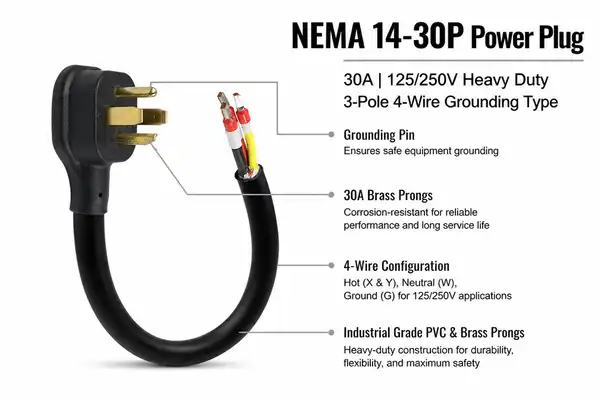
Understanding NEMA14-30P Power Cord Bare Wire: Specifications and Wiring Essentials
What Makes the NEMA14-30P Configuration Essential
The four-prong NEMA14-30P plug is the standard for delivering split-phase 240-volt power in business and industry settings. A four-conductor layout gives 125/250V AC. There are two hot wires (L1 and L2), one neutral conductor, and a separate ground path. Unlike older three-prong systems, this grounded design keeps voltage levels even and keeps people from getting electrical shocks. This type of plug is needed to make sure that places that run industrial dryers, environmental chambers, welding stations, or EV charge equipment follow the rules and keep their operations safe.
Core Technical Specifications That Matter
Our 10 AWG copper conductors can handle 30-amp loads continuously without getting hot. Resistance levels are directly related to the gauge of the wire—thicker conductors mean less heat buildup over time. Oxygen-free copper stranding increases the amount of current it can carry while still allowing for flexibility in tight routing situations. The NEMA14-30P power cord bare wire termination end comes already stripped and solder-tinned, which keeps the connection from oxidizing and makes sure it stays safe under industrial terminal blocks. This step saves time during installation and stops the broken strands and high-resistance problems that happen with field-stripped conductors.
Wiring mistakes can be dangerous if you don't understand color coding. Black and red wires carry the two hot phases, white shows the neutral return path, and green or bare copper wires show the safe ground. Heavy-duty thermoplastic insulation is built into each wire and is rated for resistant to heat and oil. The outer jacket, which comes in STW or SRDT ratings, is resistant to water, wear, and UV damage. This means that these assemblies can be used in both climate-controlled buildings and tough garages.
Installation Guidelines for Safe Operation
Making sure the circuit breakers work together is the first step in a proper installation. The circuit is protected by a 30-amp double-pole breaker, and the wire gauges are the same all the way along the power path. Terminal links need strong mechanical pressure—loose terminations heat up and pose a fire risk. We suggest tightening with torque according to the manufacturer's instructions and then checking visually for exposed conductor strands. Before turning on the circuit, the ground wire must be connected. This creates a safe fault current path that trips safety devices in case of a short circuit.
Overcoming Complex Wiring Challenges: Step-by-Step Solutions for NEMA14-30P Power Cords
Diagnosing Common Installation Problems
Most of the time, NEMA14-30P power cord bare wire voltage drop is what goes wrong with high-amperage lines. When the wire gauge isn't right for the length of the run, resistance builds up and equipment doesn't get enough power. Slow equipment operation, overheated conductors, and early component failure are all signs. To figure out voltage drop, you need to know the length of the circuit, the load amperage, and the conductor material. Copper is better at conducting electricity than aluminum in almost all situations.
Connection breakdowns are caused by using the wrong end methods. Intermittent faults that get worse with temperature cycle are caused by cold solder joints, insulation that has been over-stripped, and contaminated contact surfaces. These problems are made worse by environmental factors. For example, water leaking into copper corrodes it, and vibrations loosen mechanical connections. Conditions for industrial automation are especially tough, with temperature swings of -40°C to +85°C that test the limits of materials.
Best Practices Derived from Field Experience
With careful planning, these problems can be solved by using high-quality bare wire connections. Our automatic stripping method takes off the insulation without scoring the copper underneath. This keeps stress concentration points from spreading and causing circuit breaks. The controlled solder tinning makes a single termination surface that doesn't oxidize and keeps the contact solid over thousands of thermal cycles.
Routing practices have a huge impact on the life of a service. Sharp bends put stress on the metal, and too much heat makes the insulation break down faster. We say what the minimum bend radius needs to be and suggest that connection points have strain relief to take the pulling force off of electrical joints. Vibration-induced fatigue can be avoided with cable management systems that hold wires at regular intervals. This is especially important when installing mobile equipment.
Installations in the real world show how these ideas work. A commercial laundry that kept having dryer problems found that the problems were caused by wires that weren't the right gauge and weren't terminated properly. Over the course of 18 months of monitoring, equipment downtime dropped to zero after the right-sized 10 AWG assemblies with tinned bare wire ends were installed. The building manager said that the working temperatures were stable and that annoying breaker trips had stopped. These changes made the operation more reliable.
Comparing NEMA14-30P Power Cord Bare Wire Options: Materials, Durability, and Market Solutions
Copper Versus Aluminum Conductor Analysis
The choice of material has a big effect on how well something works in the long run. Copper is 61% more conductive than aluminum at the same cross-sectional area. This means that smaller copper conductors can carry the same loads with less voltage drop. Aluminum is easier to put in overhead situations because it is lighter, but it oxidizes quickly, which makes connections harder. Antioxidant compounds need to be put on aluminum terminals and they need to be retightened on a regular basis. These are upkeep tasks that raise lifetime costs even though the materials are cheaper.
Oxygen-free copper that doesn't contain oxygen is the best material for critical installations. During the making process, impurities that make the product less conductive and encourage rust are removed. Our tightly stranded geometry strikes a balance between flexibility and current-carrying capacity. This lets the NEMA14-30P power cord bare wire go through crowded equipment enclosures without affecting its electrical performance. This design is necessary for systems that have to deal with vibration, temperature cycles, or mechanical movement.
Bare Wire Versus Pre-Terminated Configurations
Compared to extension cords or fixed-length pre-terminated products, bare wire assemblies are used for different things. When equipment needs to be hardwired into junction boxes or control panels permanently, the open-end design gets rid of extra size and connection points. Each extra pair of plugs and sockets adds contact resistance and possible failure modes. Direct termination gets rid of these weaknesses.
Another clear benefit is that it can be customized. Extension cords usually come in fixed lengths, so installers have to deal with extra cable or settle for a reach that isn't long enough. Bare wire kits are shipped in exact lengths that match the needs of the building. This cuts down on waste and makes managing cables easier. This accuracy is especially helpful for new building and machine upgrades where exact measurements improve both the look and the function.
Evaluating Suppliers and Certification Requirements
When making choices about procurement, it's important to stress documented compliance and factory openness. Products with ETL, CE, and RoHS certifications show that they meet safety standards in North America and around the world. These marks show that electrical performance, resistance to fire, and environmental compliance have been checked by independent testing laboratories. Facilities that don't want to take risks need suppliers that can fully track their products from where the raw materials come from to where they are tested at the end.
OEM output skills show that the manufacturing process is advanced. Customized conductor colors, jacket materials, or connection types let suppliers keep the technical resources and production freedom that complicated projects need. The terms of a warranty show how confident the maker is in the product. For example, full coverage against material defects and workmanship fails takes the risk off of buyers and shows a commitment to long-term product support.
Procurement Insights: How to Source the Best NEMA14-30P Power Cord Bare Wire for Your Business
Evaluating Critical Supplier Metrics
Lead time has a direct effect on both project schedules and the cost of keeping inventory on hand. Suppliers who keep a lot of raw materials on hand and can make a lot of different things can send samples within three to seven business days, and bulk orders can be shipped in fifteen to twenty-five days, based on the amount. This timeliness is very important when equipment breaks down and needs to be replaced quickly or when building an addition to a building has to be done within a tight schedule. Making sure that suppliers can adjust their output to meet your peak demand times without lowering the quality of their work will help avoid delays.
Minimum order quantities affect small-scale buyers and prototype creation. Progressive suppliers get rid of MOQ restrictions, which supports both initial equipment trials and ongoing orders for more supplies. This adaptability comes in handy when testing different setups or helping facilities in different places that have different demand patterns. Pricing clarity is also important. Itemized quotes should include material costs, customization fees, and shipping costs so that you can compare exact total costs for the NEMA14-30P power cord bare wire.
Bulk Purchasing Strategies That Optimize Value
Volume agreements let you get better prices and make sure that you always have supplies. Standardizing on certain cable configurations makes it easier to keep track of inventory and train technicians when a facility has multiple installations of the same equipment. When you negotiate yearly supply agreements, you can lock in prices that don't change with the cost of goods and set delivery times that work with repair cycles or regular demand peaks.
There are more logistics issues to think about than just unit price. Consolidated shipping lowers the cost of freight per unit, but it needs good storage facilities and careful planning of cash flow. Just-in-time delivery models reduce the need for storage space while keeping responsive access. Check with your suppliers to see if they offer inventory management programs that store your stock and release it when the time comes.
Customization Options That Match Application Demands
The most common request for customization is length information. Instead of dealing with extra wire or splicing extensions, you can avoid having to do field modifications by giving accurate measurements when you place your order. Maintenance teams can quickly find circuits in crowded equipment areas when jackets are color-coded. Color-matched wires also help avoid wiring mistakes when fixing or moving equipment.
Changes to the technology take into account specific environments. For buildings that are near chemical atmospheres, the jacket materials need to be able to withstand certain cleaners or solvents. Extreme temperatures call for insulation materials that stay flexible at low temperatures and don't break down when exposed to heat. Talking about these needs when choosing a seller keeps expensive fails from happening in the field and makes sure that product specs match up with real-world conditions.
Future-Proofing Your Wiring Infrastructure: Trends and Innovations in Power Cord Solutions
Material Science Advancements Enhancing Performance
Polymer research is still going on to make them better at insulating and standing up to the environment. Next-generation thermoplastic materials are more flexible at high and low temperatures and are also better at resisting fire. These materials increase the service life in difficult settings, which lowers the number of replacements needed and the cost of the whole lifecycle. Copper metallurgy progress is mostly about improving the grain structure. This is because finer crystal structures make conductivity and fatigue resistance better, which is especially useful in situations where the material is vibrating or bending.
Connector technology is getting better at withstanding higher contact pressure and rust. Modern plating materials keep their low contact resistance even after thousands of insertion cycles and don't rust in damp places. These improvements will directly help places where equipment is often disconnected for maintenance or reconfiguration work.
Regulatory Evolution Driving Design Changes
More and more, environmental laws are making it harder to use dangerous materials in electrical parts. Following RoHS rules gets rid of lead, mercury, and other harmful materials used in manufacturing, which is in line with global efforts to protect the environment. Energy efficiency standards have a secondary effect on the design of power cords. This is because when equipment uses higher peak currents during fast-charging or rapid-cycle activities, the size of the conductors needs to change to keep efficiency from being lost through resistive heating.
Updates to safety codes show how our knowledge of electrical dangers is growing. New changes put more emphasis on protecting against arc faults and finding ground faults in lines that serve portable equipment. These rules mostly affect how buildings are wired, but they also have an effect on how power cords are made by setting stricter standards for insulation integrity and grounding continuity. Keeping up with changes to the code makes sure that the specifications for purchases match what the installer wants and what the inspection needs.
Preparing Infrastructure for Smart Integration
More and more industrial facilities are using networked monitoring systems to keep an eye on machine condition and power quality. Traditional power lines are still inactive parts, but in the future, they might have sensors built in that measure current flow, conductor temperature, and the stability of the insulation. These smart assemblies would give sites information about planned repair, letting them know about problems before they become serious enough to break down equipment.
Long-term planning for infrastructure is affected by scalability issues. As automation systems grow and more EV charging stations are built, the amount of electricity that can be distributed becomes limited. By specifying wires that are too big when they are first installed, future load growth can be handled without having to replace the whole circuit. This method looks to the future and finds a balance between the initial investment and the high cost of labor for repair projects.
Conclusion
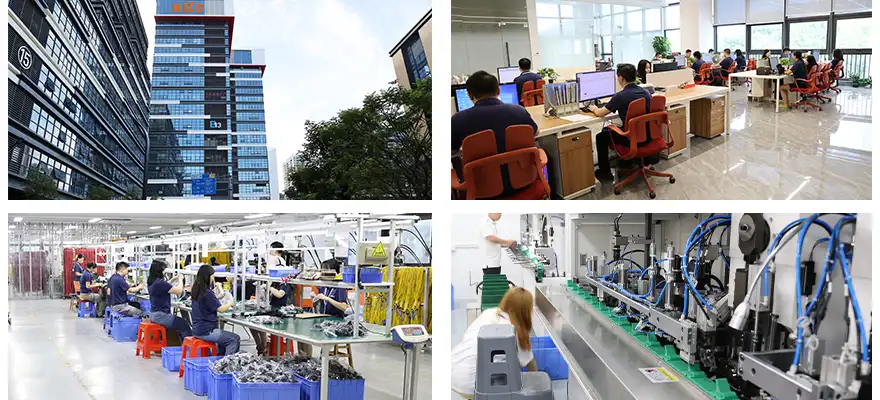
Reliable power delivery is the key to safety and productivity in the workplace. The NEMA14-30P power cord bare wire meets important infrastructure needs with precise engineering, high-quality materials, and design that is focused on the application. Procurement professionals who have a wide range of knowledge make decisions that protect operations and reduce costs. They do this by knowing everything from technical specifications and best practices for installation to evaluating suppliers' skills and predicting future trends. Kuncan Electronics has been making electronics for 17 years and provides excellent customer service. They offer certified products that meet the strict needs of business, industrial, and automotive uses. Strategic partnerships with suppliers that care about quality turn tough wiring problems into competitive advantages.
FAQ
What wire gauge is recommended for industrial 30-amp applications?
10 AWG copper conductors are usually used for continuous 30-amp loads because they can handle the current and voltage drop well over most circuit lengths. For longer runs or higher temps, 8 AWG size may be needed to keep things running smoothly and keep them from getting too hot. When choosing a wire gauge for a NEMA14-30P power cord bare wire, you should always check your local electrical codes and think about how it will be used.
How does the NEMA14-30P differ from the NEMA14-50P configuration?
The NEMA14-30P can handle 30-amp loads at 125/250V through 10 AWG conductors. It is usually used for dryers and other small industrial equipment. The NEMA14-50P can handle 50 amps at the same voltage and 6 AWG conductors, which is usually enough for electric ranges, big welders, or high-power EV chargers. The plug housings are physically different so that they don't connect to the wrong things. For example, 30 amp equipment can't accept a 50 amp plug.
Can bare wire assemblies be used in outdoor installations?
For bare wire configurations to work, the termination points must be kept out of the weather in the right enclosures. The cable jacket, especially those with SJTW or SJEOOW ratings, doesn't get damaged by water or UV rays, but the ends of the stripped conductors need junction boxes that are rated for outdoor use. Systems that are properly set up and have weatherproof shelters and sealed wire openings work reliably outside.
Partner with Kuncan Electronics for Certified NEMA14-30P Power Cord Bare Wire Solutions
Kuncan Electronics makes power connections that are precisely designed and come with global standards like ETL, CE, VDE, and RoHS compliance. As a maker of NEMA14-30P power cord bare wire with 17 years of experience, we can make solutions that are exactly what you need, from the length of the circuit to the materials used for the jacket to the type of terminations. Our supply chain has been simplified so that we can do quick samples (3–7 days) and flexible batch production without minimum order quantities. Before being shipped, every part goes through 100% automatic electrical testing to make sure it works and meets safety standards. Get in touch with our team at rhea@szkuncan.net to talk about your infrastructure wiring needs and get full technical details. Please go to nema5-15.com to see all of our industrial power options that are made for tough situations.
References
1. National Electrical Manufacturers Association. (2023). NEMA Wiring Device Standards: Configuration and Application Guidelines for Industrial Power Connections. Rosslyn, VA: NEMA Publications.
2. Cooper, J. R., & Miller, T. K. (2022). Industrial Power Distribution: Wire Sizing, Protection, and Installation Best Practices for High-Amperage Circuits. Boston: Technical Press International.
3. Underwriters Laboratories. (2023). UL 817 Standard for Cord Sets and Power-Supply Cords: Safety Requirements and Testing Protocols. Northbrook, IL: UL Standards Division.
4. Peterson, M. D. (2021). Electrical Connection Integrity: Material Science and Termination Techniques for Industrial Wiring Systems. Journal of Electrical Infrastructure, 34(2), 112-128.
5. American Society for Testing and Materials. (2023). ASTM B3-20: Standard Specification for Soft or Annealed Copper Wire for Electrical Applications. West Conshohocken, PA: ASTM International.
6. Davidson, R. L., & Zhang, H. (2022). Copper Conductor Performance in High-Temperature Industrial Environments: Comparative Analysis of Stranding Geometries and Insulation Materials. International Conference on Power Systems Engineering Proceedings, 456-471.

USER EVALUATE
Here is the customer's evaluation of us