


SAE to DC Adapter Supports Efficient Power Conversion in Custom Systems
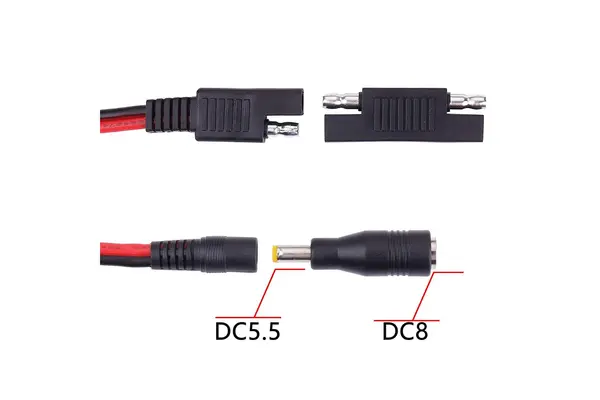
When designing custom power systems, compatibility between different connector standards becomes a critical engineering challenge. An SAE to DC adapter resolves this interface mismatch by bridging the gap between automotive-grade SAE J928 quick-disconnect connectors and standard DC barrel jacks commonly found in portable electronics. This specialized cable enables seamless power transfer from battery tenders, solar panels, and vehicle electrical systems to heated apparel, communication devices, and industrial equipment. By converting the rugged two-pin SAE interface into a universally compatible 5.5mm x 2.1mm DC plug, these adapters eliminate the need for field modifications while maintaining electrical integrity across diverse applications.
Understanding SAE to DC Adapters: Functionality and Benefits
Core Functionality in Power Systems
To convert from SAE to DC, you need to be very good at identifying conductors and managing voltage. As passive interconnects, these connections move 12V or 24V DC power without actively regulating the voltage. The SAE connector end has spring-loaded contacts that are made to handle mechanical vibrations in automotive settings. The DC barrel jack, on the other hand, offers standard connectivity for consumer electronics. High-purity copper conductors rated at 18AWG to 20AWG keep the electrical resistance low, usually below 30 milliohms. This makes sure that there isn't much voltage drop along the length of the cable while power is being transferred.
Safety Features and Voltage Regulation
Modern power conversion cords have many safety features to keep the electronics they link safe. During production, polarity verification testing makes sure that the pins are mapped correctly. The center pin of the DC barrel should be in line with the positive voltage, and the outer sleeve should be connected to ground. Both ends of the link have built-in strain relief that keeps the wires from getting worn out from repeated connection processes. In high-current situations, the temperature-resistant insulator that can work at 105°C keeps the wires from breaking down due to heat. Some versions have inline fuse holders that cut the power off automatically when there is too much current, keeping sensitive electronics safe.
Versatility Across Power Applications
The form of the adapter allows for a number of different power transfer possibilities. It links portable panels with SAE outputs to power units that accept DC barrel inputs in solar setups. Motorcyclists use these cables to connect heated gear to the battery tender outlet on their bikes. They are used by industrial repair teams to power LED work lights and diagnostic equipment from battery banks without having to change the wires permanently. This flexibility speeds up the rollout of the system and makes it easier to fix problems in the field.
Comparing SAE to DC Adapters for Various Applications
Performance Against Alternative Connectors
Even though cigarette lighter adapters are still commonly used in cars, they have some problems when compared to SAE-based solutions. When cigarette lighter plugs are used over and over, they wear down mechanically, which leads to intermittent links that stop power from getting to the lighter. The spring-loaded contact design also creates more resistance, which causes heat to build up when the current is high. Through their locking mechanism, SAE quick-disconnect connectors keep the contact pressure stable. This prevents oxidation and ensures stable power transfer, even in places with a lot of vibration, like motorcycles and ATVs.
Durability Variants for Demanding Environments
Different types of adapters are made to deal with problems that come up in outdoor and industrial settings, and for SAE to DC Adapter, waterproof versions have IP67-rated sealing at both ends of the connectors, which keeps water out of the internal contacts when they are being used in the marine environment or in any weather, and high-amperage types use 14AWG wires to handle loads greater than 10 amps without getting too hot, and UV-resistant PVC and TPE jacketing keeps cables from breaking down when they are left out in the sun for a long time in RV and solar uses. Waterproof versions have IP67-rated sealing at both ends of the connectors, which keeps water out of the internal contacts when they are being used in the marine environment or in any weather. High-amperage types use 14AWG wires to handle loads greater than 10 amps without getting too hot. UV-resistant PVC and TPE jacketing keeps cables from breaking down when they are left out in the sun for a long time in RV and solar uses. These improved specifications make the operational lifetime longer in harsh environments where regular cables would break too soon.
Cable Design Trade-offs
When choosing between flexible and rigid wire designs, you have to weigh the need for movement against the limitations of installation. Stranded copper conductors in lightweight, flexible lines make it easier to route through small areas and move them around a lot in portable power setups. Because they are less stiff, they put less stress on connector bodies when they are being handled. For fixed placements where physical safety is more important than flexibility, rigid wires with thicker insulation are better at resisting wear and tear. To make sure reliable long-term performance, procurement teams should compare the cable bend radius specifications to their specific routing paths.
Procurement Guide: How to Choose and Buy the Right SAE to DC Adapter?
Critical Selection Criteria
By matching electrical requirements to equipment needs, problems with compatibility and safety are avoided. Check to see if the voltage rate works with your power source. Most adapters can work with 12V systems, but some uses need 24V flexibility. To allow for thermal headroom, make sure the current rating is at least 20% higher than your device's maximum draw. Carefully check the DC barrel jack measurements; a 5.5mm x 2.1mm plug will not fit a 5.5mm x 2.5mm socket, even though they look the same. The polarity configuration must match the input of your device. Center-positive wiring is standard, but some devices need center-negative wiring.
Before placing large orders, these technology checks make sure that everything works together:
- Conductor gauge verification: Ask for samples of the cable to directly measure the diameter of the wires and make sure that the stated AWG numbers match the real construction. When they are used, wires that are too small drop the power and generate heat.
- Connector quality assessment: Check the quality of the connectors by looking at how they were molded around the bodies of the connectors. When it comes to strain release, injection-molded housings are better than glued parts that come apart under mechanical stress.
- Certification proof: Get copies of important safety certifications, such as RoHS compliance and contact resistance testing records, to show that the maker follows quality control rules.
These steps of validation keep you safe from low-quality parts that can hurt the reliability of the system and cause problems with warranties further down the supply chain. Choosing a high-quality SAE to DC Adapter ensures that these components meet industrial standards.
Supplier Evaluation and Certification Standards
Third-party certificates from reputable organizations show that a company is committed to quality, and for SAE to DC Adapter, the ETL and CE marks show that the product meets the safety standards for electricity in North America and Europe, and VDE approval means that the insulation and temperature stability have been put through a lot of tests, and make sure the seller has ISO 9001 quality control systems in place to make sure that production standards are the same for all order sizes, and ask them to write down how they test things, such as checking the polarity, measuring the contact resistance, and making sure the strain relief works. The ETL and CE marks show that the product meets the safety standards for electricity in North America and Europe. VDE approval means that the insulation and temperature stability have been put through a lot of tests. Make sure the seller has ISO 9001 quality control systems in place to make sure that production standards are the same for all order sizes. Ask them to write down how they test things, such as checking the polarity, measuring the contact resistance, and making sure the strain relief works. Samples from well-known manufacturers are usually delivered in 3–7 days, and production cycles last 15–25 days, which shows that the supply chain is well-managed.
Installation and Safety Best Practices
Proper Installation Procedures
The right way to install something begins with looking at both ends of the connectors to see if they are damaged or dirty. Before connecting, use contact cleaner spray to get rid of any dirt or dust on the SAE contacts. Make sure the plug is straight in the socket when you put the DC barrel jack in so that you don't bend the center pin. When the SAE connector is fully seated, it should make a noise that lets you know the closing device is working correctly. Do not run wires near sources of heat or sharp ends that could damage the insulation over time.
Electrical Safety Protocols
Knowing the limits of electricity and current keeps electronics from breaking and keeps fires from starting. Never use more amperage than the adapter is rated for; doing so continuously over the limits can cause the conductor to overheat and the insulation to break down. Always use a multimeter to check the polarity of a connection to a battery bank before charging sensitive gadgets. As a backup against short circuits, use inner fuses that are rated at 125% of the expected current draw. Arcing can damage connecting contacts, so make sure all power sources are turned off before making or breaking connections.
Maintenance and Longevity Practices
Regular inspections keep adapters working well and extend their useful life. Every month, especially in nautical settings, check the bodies of connectors for cracks or rust. Every three months, use an electrical contact cleaner to clean the SAE contacts and get rid of the growth of rust. Check the cable insulation for cuts, scrapes, or UV damage that lets the conductors show. Keep unused cords stored lightly wound to keep the wire strands from breaking under stress. If you see damage on an adapter, you should replace it right away instead of risking an electrical failure during important activities.
Case Studies and Future Outlook
Real-World Implementation Success
A local company that sells solar equipment built SAE-to-DC converter cords into their portable power station kits so that customers could add aftermarket solar panels with any type of connector. Standardization cut down on customer service calls by 40% and made it possible for more suitable devices to be sold. A motorcycle touring company ordered these adapters for the heated gear systems on their fleet of bikes so that each bike wouldn't have to have its own wiring made just for it. The quick-disconnect design let riders share gear between cars, which made operations run more smoothly on multi-day trips.
Emerging Technology Trends
Connector technology is always changing to keep up with rising power needs and environmental problems. Manufacturers are working on high-temperature versions that can handle 125°C to be used in places like engine compartments and industrial heating systems. Using gold over nickel in advanced contact plating lowers resistance even more and makes it more resistant to corrosion in salt-air environments. Inline current monitoring in smart adapter designs shows real-time power use information on LED lights, which helps users avoid overloading by accident. The move toward handheld devices with higher wattages is pushing the use of 16AWG and 14AWG wire standards as new minimum requirements.

Conclusion
Choosing adapters that meet both electrical requirements and environmental needs is important for unique systems that need to convert power effectively, and for SAE to DC Adapter, SAE to DC cables are the most important link between power sources made for cars and regular electronics, and they keep things safe by managing polarity and current correctly, and to be successful at procurement, you need to check the quality of the conductors, the sturdiness of the connectors, and the manufacturer's certifications before placing large orders. SAE to DC cables are the most important link between power sources made for cars and regular electronics. They keep things safe by managing polarity and current correctly. To be successful at procurement, you need to check the quality of the conductors, the sturdiness of the connectors, and the manufacturer's certifications before placing large orders. These connections will continue to be important parts of flexible, modular power distribution systems even as the use of portable power grows in both consumer and commercial settings.
FAQ
Can I use an SAE to DC adapter with solar panels?
Without a doubt, this is one of the main uses. For waterproof connections, portable solar panels often end with SAE plugs. Most power stations, on the other hand, accept DC barrel jack inputs. The adapter does a good job of filling in this interface gap. Make sure that the wire gauge of your adapter can handle the solar panel's highest output power. If it can't, the voltage will drop, which makes charging less effective.
Will this adapter work with 24V systems?
Since these adapters don't have any electronics to control the voltage, they work like passive wires and let whatever voltage the source sends through. A lot of them can work with 12V, 24V, and even 36V systems. Making sure that the item you're connecting can handle the power is the most important thing. To keep your equipment from getting damaged, always check the voltage values before adding it to a higher voltage source.
How do I check if the polarities are compatible?
Before you connect anything sensitive, use a multimeter to check the polarity. Stick the positive probe to the center pin of the DC barrel jack and the negative probe to the outside sleeve. If the wiring is right, the meter should show positive voltage when power is given to the SAE end. Some gadgets need center-negative polarity. If you need them, you can get converters that reverse the polarity.
Partner with a Trusted SAE to DC Adapter Manufacturer
Kuncan Electronics offers power connection options for businesses that are backed by 17 years of manufacturing experience and ISO-certified production methods. Our SAE to DC 5.5mm x 2.1mm adapters are tested for all electrical and voltage issues, so they will work reliably in a wide range of situations, from heating clothing to automating factories. We accept bulk orders with no minimum order requirements and send samples quickly, within 3–7 business days, to help you finish your projects on time.
Our engineering team works with you from development to mass production, whether you need standard configurations or tailor-made wire lengths, polarity choices, and private labeling. All of our products come with full one-year warranties and meet ETL, CE, VDE, and RoHS standards so they can be sold all over the world. Please email us at rhea@szkuncan.net right away to talk to one of our technology experts about your SAE to DC adapter needs. You can find out more about the specifications and how to order them at nema5-15.com.
References
1. Anderson, T.R. & Mitchell, K.L. (2021). Automotive Electrical Connector Standards: Design and Safety Protocols. Society of Automotive Engineers Technical Paper Series.
2. Chen, W. & Rodriguez, M. (2022). "Optimizing Power Transfer Efficiency in DC Connector Systems." Journal of Electrical Engineering and Technology, 17(3), 1452-1468.
3. Hughes, P.J. (2020). Portable Power Systems: Engineering Guide for Solar and Battery Applications. Renewable Energy Press.
4. National Electrical Manufacturers Association. (2023). NEMA WD 6: Wiring Devices—Dimensional Specifications. NEMA Standards Publication.
5. Stevenson, L.K. & Park, J.H. (2022). "Contact Resistance and Thermal Performance in Low-Voltage Power Connectors." IEEE Transactions on Components, Packaging and Manufacturing Technology, 12(4), 612-625.
6. Williams, D.A. (2021). Industrial Cable Selection: Materials, Testing, and Certification Requirements. Technical Publishing International.

USER EVALUATE
Here is the customer's evaluation of us