


How to Reduce Overheating and Loose Connection Risks in Outdoor Holiday Lighting Setups
Outdoor Holiday Wiring Is Not Only About Cable Length
In Christmas lighting, outdoor decorative lighting, and landscape lighting applications, an extension cord is often regarded as a basic accessory. For B2B buyers, retail brands, and OEM project managers, however, it performs a more demanding role: maintaining stable power connection under long operating hours, outdoor moisture exposure, frequent plugging, and complex cable routing.
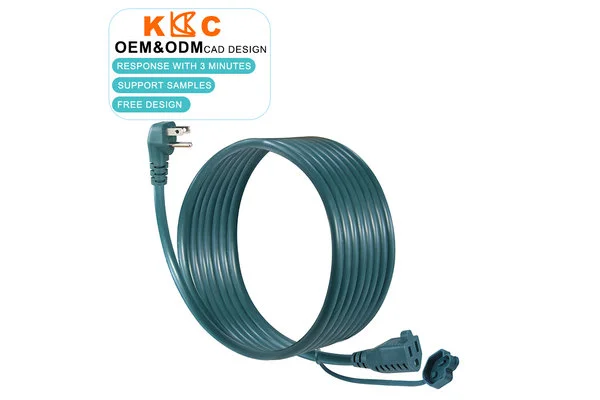
Dongguan (Shenzhen) Kuncan Electronics Co., Ltd. provides SJTW Green Outdoor Extension Cord solutions for North American outdoor holiday lighting, garden lighting, and lawn equipment applications. With a green outdoor cable body, 3-conductor grounded structure, NEMA 5-15P to NEMA 5-15R plug configuration, and a female end with safety cover, this product helps buyers better balance safety, durability, installation convenience, and visual integration in holiday lighting projects.
Why Can Holiday Lighting Cords Heat Up During Continuous Use?
Christmas lights and outdoor decorative lighting often have strong seasonal usage patterns. Installation is concentrated within a short period, operating hours are long, and cable routing distances vary from one site to another. End users may run light strings along rooflines, lawns, fences, or trees, requiring the extension cord to power multiple lighting sections or cover longer distances.
If the wire gauge is not properly selected, or if cable length and load do not match, voltage drop and heat accumulation caused by cable resistance may become more noticeable. During several hours of continuous operation, heat rise may gradually become an end-user complaint, product return, or after-sales issue for the channel.
This is why buyers should not only compare length and color when sourcing outdoor holiday extension cords. 16AWG, 14AWG, and 12AWG wire gauge options should be evaluated based on the actual application. For short-distance, low-power decorative lighting, 16AWG may be a practical choice. For longer cable runs or higher-power outdoor equipment, 14AWG or 12AWG is usually more suitable for reducing voltage drop and heat accumulation under continuous load.
For OEM buyers, wire gauge is a key parameter that should be confirmed at the early project stage. A mismatched wire gauge may not be obvious in product photos or packaging, but it can affect end-user experience during peak seasonal use.
Loose Connections Often Come from Plug Design Mismatch
Outdoor holiday lighting is rarely installed in ideal conditions. Outlets may be located near wall corners, garage exteriors, weatherproof boxes, or low ground positions. A standard straight plug may protrude from the outlet, and the cable tail may be bent, pressed, or pulled. Over time, this stress can cause plug loosening, poor contact, or unstable power supply.
The flat plug or angled head plug structure shown in the product image is more suitable for outdoor outlets with limited space. It allows the cable to route closer to the wall or outlet box, reducing stress concentration near the plug tail and making the wiring layout cleaner.
For holiday lighting installers and retail channels, this structural detail directly affects end-user experience. If users repeatedly complain that the plug is hard to fit, the cable is difficult to route, or the connection feels unstable, brands may face extra after-sales communication and return costs. Choosing a plug structure better suited to outdoor use is an effective way to reduce installation rework.
Rainwater and Debris Can Increase Outdoor Connection Risks
Holiday lighting extension cords are often placed on lawns, patios, near shrubs, or under roof edges. Even when they are not directly immersed in water, cables and connectors may still be exposed to dew, rainwater, soil, leaves, and grass clippings. If the female receptacle remains exposed, debris entry or moisture accumulation may affect connection stability.
This makes a female end with safety cover a practical outdoor feature. When the connector is not connected to a device, the safety cover helps reduce the possibility of dust, grass clippings, and rainwater entering the receptacle. For Christmas lighting, holiday decoration, and seasonal outdoor power products, cords are often stored and reused. A protected female end helps reduce poor contact risks during repeated use.
This design is not about adding a complicated selling point. It responds to real outdoor usage conditions. When comparing different extension cord options, buyers should pay attention to these small details because they can influence after-sales performance.
SJTW Outdoor Jacket Determines Whether the Cord Fits Garden Conditions
Outdoor extension cords may be dragged, bent, and exposed to lawns, soil, and low-temperature environments. If the jacket material is not suitable for outdoor use, the cable may become stiff, worn, or cracked more easily. For holiday lighting projects, this can affect not only one season of use but also the user experience when the product is installed again the following year.
The SJTW PVC Outdoor Jacket is an important specification for outdoor power cords. SJTW construction is commonly used for flexible power connections under certain outdoor conditions, including garden lighting, holiday decoration, temporary outdoor power, and lawn equipment applications. The green jacket also blends more naturally with lawns, bushes, and garden landscapes, reducing visible cable interference.
For B2B customers, the value of an outdoor jacket lies in two areas: helping the product match its intended environment and reducing after-sales complaints caused by material misuse. In North American outdoor retail and holiday lighting channels, whether a cord is suitable for outdoor use is often a key sourcing consideration.
What Technical Specifications Should OEM Buyers Confirm?
To reduce overheating, loose connection, and compliance mismatch risks, OEM buyers should confirm the following specifications before placing an order:
- Plug configuration: NEMA 5-15P to NEMA 5-15R is commonly used in North American markets
- Wire gauge: select 16AWG, 14AWG, or 12AWG based on cable length and load
- Rated voltage: common configuration is 125V AC
- Current rating: 13A or 15A should be confirmed based on wire gauge, length, and product structure
- Jacket type: SJTW PVC Outdoor Jacket is recommended for outdoor applications
- Female end protection: a safety cover may be needed to reduce dust, rainwater, and debris ingress
- Plug structure: flat or angled plug design may be required for wall outlets and weatherproof boxes
- Customization: cable length, color, label, packaging, and branding should match channel requirements
These parameters may seem basic, but they directly affect sample approval, certification communication, channel inspection, and end-user experience. For seasonal holiday lighting products, clearer specification confirmation at the early stage can make bulk delivery and after-sales management more controllable.
Conclusion: Reducing Holiday Lighting Risks Starts with the Right Extension Cord
Overheating and loose connection risks in outdoor holiday lighting setups rarely come from one single factor. They are usually the result of wire gauge, cable length, plug structure, jacket material, and usage environment working together. For buyers, a suitable outdoor extension cord is not just an accessory cost. It is a key part of reducing after-sales complaints, installation rework, and specification mismatch risks.
Dongguan Kuncan Electronics Co., Ltd. offers OEM/ODM customization for SJTW Green Outdoor Extension Cord, including wire gauge, cable length, color, plug structure, safety cover, labels, and packaging. For B2B customers serving Christmas lighting, garden lighting, holiday decoration, and lawn equipment markets, confirming key technical specifications in advance is often more efficient than handling complaints during peak season.

USER EVALUATE
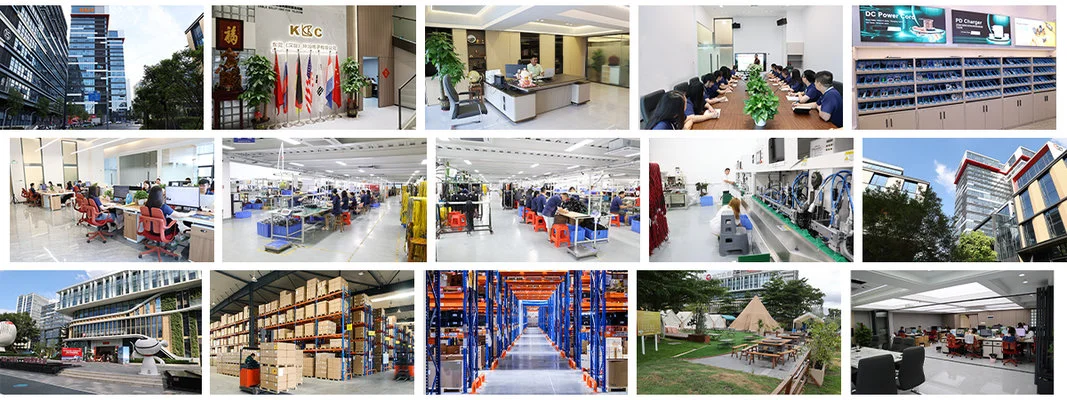
Here is the customer's evaluation of us