


How to Choose the Right Europe Plug Type for Your Target Market
Choosing the correct Europe plug type directly determines whether your product clears customs, powers on safely, and earns end-user trust across European markets. With over 12 distinct plug standards in circulation across the continent, procurement teams must evaluate pin configuration, voltage rating, grounding requirements, and regional compliance before finalizing a sourcing decision. Whether you supply consumer electronics, industrial automation equipment, or medical devices, matching the right European plug standard to each destination market is a foundational step that protects your supply chain and your brand reputation.
What Are the Main Europe Plug Types and Their Specifications?
Europe does not operate on a single unified plug standard. Instead, it uses a family of regional standards, each shaped by decades of national regulation. Understanding these distinctions is essential before placing any bulk order.
Which Plug Standards Dominate European Markets?
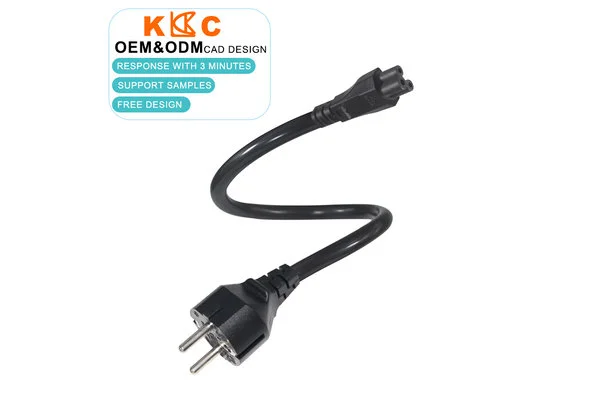
The most prevalent standards include Type C (Europlug, two round pins, ungrounded, 2.5A), Type E (French standard, round pins with a socket hole for grounding), Type F (German Schuko, CEE 7/4, with grounding clips on the socket sides), and the hybrid CEE 7/7 plug that works in both Type E and Type F outlets. Germany, Austria, the Netherlands, and much of Eastern Europe rely on Schuko. France, Belgium, and Poland use Type E. Italy and Brazil share Type L, while the UK retains its own Type G standard entirely. For B2B distributors shipping pan-European product lines, the CEE 7/7 configuration offers the broadest socket compatibility and is the recognized professional default.
How Do Voltage and Frequency Factor Into Compliance?
Most of continental Europe operates at 230V / 50Hz, which differs from North America's 120V / 60Hz standard. Understanding this difference is essential when selecting a Europe plug type for OEM power supplies and evaluating technical datasheets during procurement. A device rated only for 120V may malfunction or present a serious safety risk if connected directly to a 230V European supply without suitable voltage conversion. Therefore, buyers should check both the equipment's input-voltage range and the electrical ratings of the cord assembly before choosing a Europe plug type. Certifications and conformity documentation also play an important role in verifying product suitability. For example, VDE certification in Germany and NF certification in France may provide evidence of compliance with relevant product standards, while CE marking indicates the manufacturer's declaration of conformity with applicable EU requirements rather than independent testing in every case. When sourcing a Europe plug type, procurement teams should verify the specific certification scope, applicable safety standards, and intended market instead of assuming that one mark covers every requirement. By checking voltage compatibility, frequency ratings, plug configuration, and supporting documentation, OEMs can select the appropriate Europe plug type for their equipment and reduce the risk of installation issues. A carefully specified Europe plug type also helps streamline supplier evaluation and supports safer product distribution across European markets.
What Criteria Should Guide Your Europe Plug Type Selection?
There is no one right way to choose a plug configuration. The best choice depends on the application, the destination country, the load needs, and the regulatory environment.
Here are the main factors that buying teams use to make decisions:
- Application environment: Indoor office and IT deployments typically use PVC-jacketed cables (H05VV-F standard), while outdoor construction, garden, and industrial sites require rubber-jacketed cables rated to IP44 or higher (H07RN-F standard) that resist moisture, oil, and mechanical abrasion.
- Current and load rating: A 16A/250V rating is standard for most European extension cords and power cords. Heavier industrial loads may require upsized conductors — 3G1.5mm² wire gauge versus the lighter 3G1.0mm² used in lower-demand settings.
- Grounding requirement: Ungrounded Type C plugs are permissible only for Class II (double-insulated) devices drawing under 2.5A. Any equipment above that threshold, or any device with exposed metal parts, must use a grounded plug such as CEE 7/7.
- Child safety compliance: Certain European markets, including France and Belgium, legally require child protection shutters on socket outlets. If your product ships with an extension cord or adapter into these markets, selecting cables with optional shutter-equipped connectors eliminates a compliance gap.
These requirements are met by Kuncan Electronics' VDE-certified Schuko extension cord line, which comes in lengths from 2m to 20m and wire gauges of 3G1.0mm³ and 3G1.5mm³. It also has CEE 7/7 plug compatibility and child safety shutters that can be added as an option.
How Do Popular European Plug Types Compare Against Each Other?
A side-by-side comparison helps procurement managers quickly assess compatibility gaps and select the right solution for their target distribution market.
| Plug Type | Standard | Grounded | Voltage | Primary Markets | Compatible With CEE 7/7? |
|---|---|---|---|---|---|
| Type C (Europlug) | CEE 7/16 | No | 230V | Pan-Europe (Class II) | No |
| Type E | CEE 7/5 | Yes | 230V | France, Belgium, Poland | Yes (with adapter) |
| Type F (Schuko) | CEE 7/4 | Yes | 230V | Germany, Austria, Netherlands | Yes |
| CEE 7/7 | Hybrid E+F | Yes | 230V | Pan-Europe | Yes (native) |
| Type G | BS 1363 | Yes | 230V | UK, Ireland | No |
| Type L | CEI 23-50 | Yes | 230V | Italy | No |
This table illustrates why the CEE 7/7 format has become the preferred choice for distributors covering multiple European territories. It eliminates the need to stock separate SKUs for French and German markets while maintaining full grounding compliance.
What Are the Best Practices for Procuring and Installing European Power Cords?
As important as choosing the right products is the method used to buy them. When B2B buyers don't follow the proper installation and source screening steps, their projects can run into problems that could have been avoided.
How Should You Vet a European Power Cord Supplier?
The first sign of a reliable supplier when sourcing a Europe plug type is the depth and validity of its certifications. A trustworthy manufacturer should provide more than VDE and CE markings; depending on the product and target market, relevant documentation may also include GS certification in Germany, NF certification in France, and ETL, SAA, or BS/UKCA compliance for customers selling across multiple regions. When evaluating a Europe plug type, buyers should verify the scope and validity of each certificate rather than assuming that every mark applies to every product. Kuncan Electronics offers a range of certification and compliance options to support customers with different market requirements. With 17 years of experience in electronics manufacturing, the company electrically tests every unit before it leaves the factory, helping customers assess product quality and reliability. For procurement teams purchasing a Europe plug type in bulk, this combination of manufacturing experience, electrical testing, and relevant compliance documentation can simplify supplier evaluation. Buyers should also confirm plug configuration, voltage and current ratings, cable specifications, and destination-market requirements before placing an order. By working with a supplier that prioritizes documented quality control, businesses can source a suitable Europe plug type more confidently and reduce avoidable compliance risks when distributing products internationally.
Transparency about lead times is just as important. Samples should be delivered in 3–7 business days, and mass production should be finished in 15–25 days. These are standards that should be confirmed in writing before signing any supply agreement. A key differentiator that keeps launch delays from being too expensive is rush order support for projects that need to be done quickly.
What Installation Precautions Prevent Voltage Mismatch Incidents?
Always check the connected device's rated voltage before switching it on, especially when selecting a Europe plug type for equipment intended for use in different regions. Never assume that a 230V CEE 7/7 Schuko cord makes North American electronics compatible with European outlets; first verify that the device's power supply supports the local voltage, such as a 100–240V input range, and that its frequency and plug configuration are also suitable. Choosing the correct Europe plug type is only one part of electrical safety, so buyers and operators should inspect the cord and its insulation before each use. In wet or demanding industrial environments, H07RN-F rubber cables with cuts, cracks, or abrasions may expose conductors and increase the risk of electric shock. Any cord showing damaged insulation should be removed from service and replaced promptly. When purchasing a Europe plug type for industrial or commercial applications, procurement teams should also confirm the cable's voltage rating, environmental suitability, and relevant safety certifications. Regular inspections and proper product selection help ensure that each Europe plug type is suitable for the intended application while reducing preventable electrical hazards. By combining voltage compatibility checks with routine cable maintenance, businesses can improve operational safety and extend the reliable service life of their electrical equipment.
How Will European Plug Standards Evolve for B2B Buyers?
The European Commission is still working to improve the Low Voltage Directive and the Ecodesign Regulation. This is to encourage makers to make designs that use less energy and materials that can be recycled. Smart plug technology, which includes power metering, remote switching, and IoT connectivity, is becoming more popular in smart building projects. This is because more IP67- and IP68-rated cables and poe-enabled power distribution are needed. The growth of EV charging stations across the EU is also increasing the need for specialized wires that work with vehicles and building management systems (BMS). Through OEM/ODM flexibility and ongoing R&D investment, procurement teams that build relationships with manufacturers that can adapt to these changes will be able to stay competitive through the next regulatory cycle.
Conclusion
Meeting European plug standards requires a systematic and disciplined approach to supply chain management. Selecting the appropriate Europe plug type for the target market, verifying the manufacturer's relevant certifications, choosing suitable cable construction for the intended operating environment, and working with a supplier that maintains reliable lead times and documented quality controls all contribute to a smoother market entry. When evaluating a Europe plug type, procurement teams should also confirm the plug configuration, voltage and current ratings, applicable safety requirements, and supporting compliance documentation before placing an order. Kuncan Electronics brings these considerations together through its electronics manufacturing experience, product testing procedures, and relevant qualifications, helping buyers assess different sourcing requirements under one supplier relationship. For businesses sourcing a Europe plug type for consumer electronics, industrial equipment, or other electrical applications, consistent quality control and clear technical specifications can simplify supplier evaluation and reduce procurement risks. Buyers should discuss customization needs, sample availability, production schedules, and inspection procedures early in the purchasing process to avoid unnecessary delays. By partnering with an experienced manufacturer, businesses can source the right Europe plug type more confidently and prepare for their next procurement cycle with a clearer understanding of product compliance and delivery expectations.

FAQ
Does CEE 7/7 work in both French and German outlets?
Yes. It was made so that the CEE 7/7 plug can fit both Type E (French/Belgian) and Type F (German/Schuko) sockets. Its round pins fit both types of sockets, and the grounded contacts work properly in both. Because of this, it is the most flexible standard for grounded plugs for delivery across Europe.
What is the difference between H05VV-F and H07RN-F cable types?
The H05VV-F cable is a 300/500V flexible cable insulated with PVC. It works best in dry, indoor places like offices and stores. The H07RN-F cable has a rubber covering and is rated for 450/750V. It is also IP44 weather-resistant, which means it can be used outside where there is moisture, oil, and mechanical stress. It is both unsafe and against the rules to choose the wrong type of cable for the job.
Is VDE certification mandatory for selling power cords in Germany?
While VDE approval isn't required by law like CE marking is, it does serve as a reliable way to get into the market. It is often a requirement for German stores and corporate buyers, and it speeds up customs clearance across all EU markets by a large amount.
Partner With Kuncan Electronics for Verified European Power Cord Solutions
You can trust Kuncan Electronics to provide you with VDE-certified Schuko extension cords with Europe plug types. They have indoor PVC (H05VV-F) and outdoor rubber (H07RN-F) configurations with 16A/250V ratings and lengths from 2m to 20m. Our global certifications, including VDE, CE, GS, ETL, SAA, and BS/UKCA, and 17 years of proven manufacturing experience help procurement teams in France, Germany, and other places. You can email our technical team at rhea@szkuncan.net to talk about details, bulk pricing, and OEM customization.
References
1. International Electrotechnical Commission. IEC 60884-1: Plugs and Socket-Outlets for Household and Similar Purposes. IEC, 2022.
2. VDE Association for Electrical, Electronic & Information Technologies. VDE 0620: Requirements for Plugs and Socket-Outlets. VDE Publishing, 2021.
3. European Commission. Low Voltage Directive 2014/35/EU: Guide to Application. Publications Office of the European Union, 2020.
4. CENELEC. EN 50075: Flat Non-Rewirable Two-Pole Plugs with Cord for Class II Equipment. CEN-CENELEC Management Centre, 2021.
5. Underwriters Laboratories. UL White Book: Guide Information for Electrical Equipment. UL Standards & Engagement, 2023.
6. International Trade Administration, U.S. Department of Commerce. Exporting to Europe: Electrical Safety Compliance and CE Marking Requirements. ITA, 2022.

USER EVALUATE
Here is the customer's evaluation of us